Sunday, March 27, 2005

Sold Works of Art

Surfacing, 2016, oil on canvas,
24 x 20 in., $1,320
No Face, 2009, oil on canvas, 24 x 24 in., $1,600
A Summertime Dream, 2011, oil on canvas,
36 x 36 in., $3,350
At The Banquet The Skull Grins In, 2009, oil on canvas,
36 x 36 in., $3,350
Spring Undercurrent, 2007-09,
oil on canvas, 40 x 30 in., $3,100
Study The Stones As You Walk, 2010, oil on canvas,
36 x 36 in., $3,350
The Color Of a Dream, 2006, oil on canvas, 30 x 40 in.,
$3,100

The Jovial Gnat, 2012, oil on canvas,
30 x 30 in., $2,350

Walk With Me, 2012, oil on canvas, 36 x 36 in., $3,350
A New Way Opening, 2017, oil on canvas,
24 x 30 in., $1,900
With Anna's Help, 2006, oil on canvas,
30 x 40 in., $3,100

In The Midst of a Long, Long Fall, 2010, oil on canvas,
36 x 36 in., $3,350

Age Can Break Childhood Chains, 2016, oil on canvas
36 x 36 in., $3,350

Go All The Way, 2014, oil on canvas,
36 x 36 in., $3,350

Underwater, 2015, oil on canvas, 36 x 36 in., $3,350

Pass Through The Waters, 2015, oil on canvas,
24 x 30 in., $1,900

Elation, 2015, oil on canvas,
36 x 24 in., $2,275

Found Cord, 2014, oil on canvas, 24 x 30 in., $1,900

Red Triumph, 2004, oil on canvas, 24 x 36 in., $2,275
Here Come The Daffodils, 2015, oil on canvas,
16 x 20 in., $900

Old Memories, 2015, oil on canvas, 16 x 20 in., $900
Almost Over, 2008, oil on canvas,
20 x 16 in., $900
Face Off, 2013, oil on canvas, 12 x 12 in., $500

The World Begins, 2016, oil on canvas,
16 x 20 in., $900

Reaction To Tobor, 2015-16, oil on canvas,
24 x 30 in., $1,900

Black Trilogy A, 2015, oil on canvas, 14 x 14 in., $625

Black Trilogy B, 2015, oil on canvas, 14 x 14 in., $625

Black Trilogy C, 2015, oil on canvas, 14 x 14 in., $625

Breakout, 2015, oil on canvas, 24 x 36 in., $2,275
Not Sure, 2006, oil on canvas,
 18 x 24 in., $1,200

Is There Still A Fire In Your Attic, 2012, oil on canvas,
14 x 14 in., $625

Bypass, 2014, oil on canvas, 15 x 30 in., $1,250

No Face, 2012, oil on canvas, 24 x 24 in., $1,600

Turbulence, 2012, oil on canvas, 24 x 24 in., $1,600

Go Fishing, 1997, oil on canvas, 30 x 24 in.,
$1,900

Bottles, n.d. (early 1960s), lacquer on
masonite, 28 x 20 in., $2,800
Knight-Errant, n.d. (early 1970s),
lacquer, oil and sawdust on masonite,
36 x 24 in., $4,300

Three Sisters, 1957, lacquer on
masonite, 42 x 29 in., $6,000
Summer In Famously Hot, 2015, oil on canvas,
36 x 48 in., $4,400
Try, Try Again, 2015, oil on canvas,
60 x 40 in., $6,600

Eligible For Exchange, 2011, oil on canvas,
36 x 48 in., $4,400

To The Utmost, 2012, oil on canvas,
60 x 48 in., $7,000
Tree, 1960s-70s, lacquer on masonite,
28 x 22 in., $3,100
Three Figures, c. 1958-59, lacquer on
masonite, 20 x 16 in., NFS

Composition No. 10, 1961, lacquer on masonite,
28 x 38 in., NFS

Loneliness, 1958, lacquer on masonite, 31 x 25 in., NFS

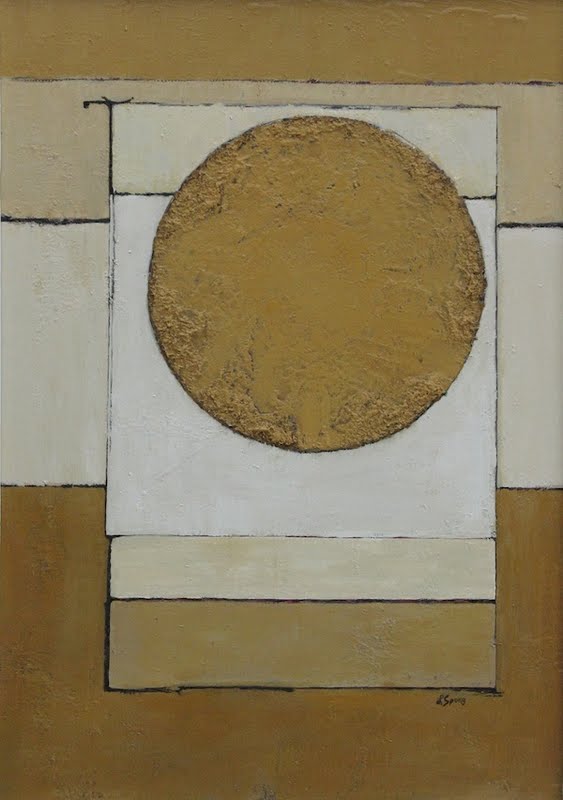
Yellow Circle on White Block, c. 1969,
lacquer on masonite, 39 x 27 1/2 in.,
$5,300

White Flowers, n.d. (late 50s), lacquer
on masonite, 28 x 20 in., $2,800
(S.C. State Art Collection)
19 1/2 Years of Painting, 2010, oil on canvas,
30 x 30 in.,  $2,350
An Energetic Enigma, 2011, oil on canvas, 36 x 36 in.,
$3,350
Flipped, 2007-14, oil on canvas, 36 x 36 in., $3,350
Acrimonious Acrobats, 2010, oil on canvas,
24 x 30 in., $1,900
Thrown Out, 2001-05, oil on canvas,
24 x 30 in., $1,900
Spring Is Struggling To Come, 2016, oil on canvas,
24 x 30 in., $1,900
Time Is Taking It's Time, 2008-17, oil on canvas,
24 x 24 in., $1,600
It's Too Late Now, 2012, oil on canvas,
20 x 16 in., $900
Here Is Where You Are, 2012, oil on canvas, 48 x 60 in.,
$7,000
Skip On Down The Road, 2015, oil on canvas,
36 x 48 in., $4,400
Don't Sell The Land, 2012, oil on canvas,
36 x 48 in., $4,400
Watching The River, 2008, oil on canvas,
20 x 20 in., $1,100
Fear Is Not A Friend, 2014, oil on canvas,
30 x 24 in., $1,900
Pomegranate and Seeds, 2011, oil on canvas,
36 x 36 in., $3,350

Yes, I Might, 2013, oil on canvas, 12 x 12 in., $500
Looking Back, 2010, oil on canvas, 18 x 18 in., $900
Grubby Storks, 2008, oil on canvas,
20 x 20 in., $1,100

Soup, 2008, oil on canvas, 20 x 20 in., $1,100


Take Refuge, 2011, oil on canvas, 14 x 14 in., $625
Treed, 2006, oil on canvas, 18 x 24 in.,
$1,200
Doubtful, 2008, oil on canvas,
20 x 16 in., $900

Down To The River To Pray, 2012, oil on canvas,
16 x 20 in., $900

I Digress, 2012, oil on canvas, 24 x 24 in., $1,600

Lackadaisical, 2013, oil on canvas, 12 x 12 in., $500

Never, Never, 2012-15, oil on canvas, 12 x 12 in., $500

Dusk, 2015, oil on canvas, 16 x 20 in., $900

Changes Are Confusing, 2015, oil on canvas,
20 x 20 in., $1,100

Too Many Clouds Eat Up The Stars, 2015, oil on canvas,
30 x 30 in., $2,350
Now What's Today, 2006,
oil on canvas, 12 x 24 in., $825
Orange Beach, 2018, oil on canvas, 12 x 12 in., $500
The Quiet One, 2018, oil
on canvas, 24 x 12 in., $825

A Rocky Road, 2018, oil on canvas, 24 x 30 in., $1,900

Giddy, 2018, oil on canvas, 20 x 16 in., $900


Try To Clear Your Mind, 2016, oil on canvas,
18 x 24 in., $1,200


Department Meeting, 2016, oil on canvas,
20 x 16 in., $900

Left From 8s III, 2008, oil on canvas, 8 x 8 in., $300

We Always May Be What We Might Have Been,
2014, oil on canvas, 72 x 60 in., $9,800

Flower II, 2011-15, oil on canvas,
16 x 12 in., $625

Flower I, 2011-15, oil on canvas,
16 x 12 in.,  $625

Orange Makeover, 2005, oil on canvas,
24 x 24 in., $1,600

Cabin Fever, 2013, oil on canvas, 12 x 12 in., $500
Fish Pond, 2010, Oil on canvas, 24 x 30 in., $1,900
Black Spiral On Red, 1999, 
woodcut ed. 5/12,
12 x 9 in., $200


Dream Fragment I, II, III, n.d.
Woodcut, 2/2, 12 x 6 in., $ 175 each
Through A Spider's Eyes, 2009, oil on canvas
 36 x 36 in., $ 3,350
Waiting To Feed The Butterflies, 2007, oil on canvas
48 x 48 in., $5,700
If You Don't Know What You're Looking For 
You Can't Find It, 2015, oil on canvas,
 60 x 48 in., $7,000
Whimsical, 2000, oil on canvas, 24 x 36 in., $2,275
Aftermath, 2015, oil on canvas, 48 x 36 in.,
$4,400
The Red Moon Floating, 2015, oil on canvas,
20 x 16 in.,  $900
Dream II, The Ground Gave Way, 1993, oil on canvas
24 x 30 in., $1,900
Ease Out, 2007, oil on canvas, $625
A Wave Of Relief, 2011, oil on canvas,
48 x 36 in., $4,400
Underwater, 2007, oil on canvas, 24 x 24 in., $ 1,600

Untitled, n.d., oil on canvas, 30 x 30 in., $ 2,350
Be Alert, 2011, oil on canvas, 10 x 10 in., $550
The Key To The Puzzle, 2011,
oil on canvas, 48 x 36 in., $4,400
Taunt, 2010, oil on canvas,
14 x 11 in. $ 525
A Three Legged Kite Flyer, 2014,
oil on canvas, 30 x 24 in., $1,900
Tell A Tale, 2013, oil on canvas, 12 x 12 in., $500
Confused Skeptic, 2014, oil on canvas,
30 x 24 in., $1,900
Hang Some Os, 2015, oil on canvas,
20 x 20 in., $1,100
My Bucket's Got A Hole In It, 2012,
oil on canvas, 16 x 20 in., $900
As It May Be, 2011, oil on canvas, 30 x 30 in., $2,350
Ode To The Engineer Linda, 2000,
oil on canvas, 36 x 24 in., $2,275
Lenient, 2005-06, Oil on canvas, 40 x 50 in.
$ 5,000
Value Your Experience, 2013, oil on canvas, 12 x 12 in.,
$500
Tranquil, 2010, oil on canvas, 12 x 12 in., $500
Zany (Z Series), 2010, oil on canvas,
20 x 16 in., $900
Tree, 1960s-70s, lacquer on masonite,
28 x 22 in., $3,100
Over You Go, 2015, oil on canvas,
16 x 12 in., $528
It's Coming, 2015, oil on canvas,
 20 x 16 in., $900
Watercooler Talk, 2015, oil on canvas,
 20 x 16 in., $900

Zero (Z Series), 2010, oil on canvas,
20 x 16 in., $900
Zip Zone Diptych (Z Series), 2010, oil on canvas diptych,
20 x 32 in. (20n x 16 in. each), $1,800
Don't Put All Your Eggs In One Basket, 2014, oil on
canvas, 30 x 30 in., $2,350

Zoot Suit (Z Series), 2010, oil on canvas,
20 x 16 in., $900
All That Glitters Is Not Gold, 2014, oil on canvas,
36 x 36 in., $3,350
April Showers, 2012, oil on canvas
48 x 36 in., $4,400
Untitled (#847), 2015, oil on canvas, 12 x 12 in., $500

Could Be Moonrise, Elsewhere, 2014, 
oil on canvas, 36 x 30 in., $2,950

Dabbling, 2013, oil on canvas, 12 x 12 in., $500

Dabbling, 2013, oil on canvas, 12 x 12 in., $500

Unmasked, 2008, oil on canvas, 20 x 20 in., $1,100
Easy Going, 2013, oil on canvas, 12 x 12 in., $500

More To Go, 2013, oil on canvas, 12 x 12 in., $500

A Small Mountain, 2016, oil on canvas, 16 x 20 in.,
$900
Metaphysics, 2016, oil on canvas,16 x 20 in., $900
Habitat For Hobbits, 2013, oil on canvas,
12 x 12 in., $500
Night Of The Summer Solstice, 2007, oil on canvas,
20 x 20 in.,$1,100
Who Knows, 2014, oil on canvas, 20 x 20 in., $1,100
SR I, 2015, oil on canvas, 12 x 12 in., $500
Is Anything More Quiet Than Moonlight, 2008, oil on canvas,
24 x 24 in., $1,600
Steam Ahead, 2013, oil on canvas, 36 x 48 in., $4,400
Floating Up, 2011, oil on canvas,
30 x 48 in., $3,700
You Can't Fall Off The Floor, 2011, oil on canvas,
36 x 36 in., $3,350
Zounds (Z Series), 2010-15, oil on canvas,
20 x 16 in., $900

Untitled, 2014, oil on canvas, 12 x 12 in., $500
I've Always Been Thirsty, 2011, oil on canvas,
60 x 48 in., $7,000

It's Greener Over the Fence, 2014, 12 x 16 in., $625
My Lips Are Sealed, 2009, oil on canvas, 20 x 20 in.,
$1,100
Revelry, 2012, oil on canvas, 20 x 20 in., $1,100
Embla, 2004, oil on canvas,
48 x 36 in., $4,400
Summer Storm At The Beach, 2010, oil on canvas
30 x 30 in., $2,350
Send In the Clowns, 2009, oil on canvas, 24 x 24 in.,
$1,600
Non-Isometric, 2011, oil on canvas, 20 x 20 in., $1,100
Women Who Pay Their Own Rent Don't Have To Be Nice,
2011, oil on canvas, 48 x 60 in., $7,000
Don't Grow Too Old Too Young, 2014, oil on canvas,
24 x 30 in., $1,900
The Pumpkin Speak One Time Only, 2009, oil on canvas,
30 x 30 in., $2,350

Did You Miss the Boat, 2010, oil on canvas, 30 x 30 in.,
$2,350
A Private Conversation, 2011, oil on canvas, 20 x 20 in.,
$1,100

Embarking, 2008, oil on canvas,
 36 x 24 in., $2,275
Beyond Bias, 2008, oil on canvas, 36 x 36 in., $3,350

Remote Control, 1960s & 1990s, lacquer, oil
on masonite, 20 x 16 in., $1,900

$35 Once, n.d. (late 1950s), lacquer on masonite,
16 x 20 in., $1,600

3 X's, 2007-08, oil on canvas, 16 x 20 in., $900
Dreaming Blue, 2007, oil on canvas, 14 x 14 in., $625

Ain't Gonna Work Tomorrow, 2012, oil on
canvas, 16 x 20 in., $900
Murky Entrance, 2008, oil on canvas, 36 x 36 in.,
$3,350

Countdown To 10, 2008, oil on canvas, 36 x 36 in.,
$3,350
Overwhelmed, 2012, oil on canvas, 14 x 14 in., $625
So What, 2012, oil on canvas, 14 x 14 in., $625
Navy Beans, 2009, oil on canvas, 24 x 24 in., $1,600
Sunless Riddle, 2009, oil on canvas, 36 x 36 in., $ 3,350
Countdown to 10, 2008, oil on canvas, 36 x 36 in, $3,350
Red Squares, 2010-12, oil on canvas, 24 x 30 in., $1,900
Stop And Go, 2010, oil on canvas, 30 x 30 in., $ 2,350
Tracks Of The White Cow, 2005, oil on canvas, 26 x 26 in.
$1,800
The Fascination Of A Path That Never Ends, 2013,
oil on canvas, 36 x 36 in., $3,350 
Untitled, 2005, oil on canvas, 20 x 20 in., $1,100

A Gray Celebration, 2012, oil on canvas, 14 x 14 in.,
$625


Prelude To Spring, 2011, oil on canvas,
36 x 36 in., $3,350
Murky Entrance, 2008, oil on canvas, 36 x 36 in., $3,350

Unseen Site, 1997, oil on canvas, 30 x 30 in., $2,350
Dune Changes, 2009, oil on canvas, 36 x 36 in., $3,350
Are You Ready For A Change, 2011
Oil on canvas, 48 x 36 in., $4,400
Redo, 2009, oil on canvas, 36 x 36 in., $ 3,350
Celebrating Shelby's Recovery, 2007
oil on canvas, 30 x 24 in., $1,900
The Chief is Dead, 2010, oil on canvas, 36 x 36 in.,
$ 3,350
Ambiguity Is Important, 2011, oil on canvas, 36 x 48 in.
$4,400
Crossover, 2012, oil on canvas, 20 x 20 in., $1,100
Antoni, 2007, oil on canvas, 24 x 24 in., $1,600

You're The Reason My Children are Ugly, 2012
Oil on canvas, 16 x 20 in., $900

Dancing To An Unnamed Tune, 2011, oil on canvas
36 x 48 in., $ 4,400
Luminous, 2009, oil on canvas, 20 x 20 in., $1,100
Unfamiliar Territory, 2007, oil on canvas,
24 x 24 in., $1,300
Dream Away, 2009, oil on canvas, 36 x 36 in., $2,900
Game Time, 2008, oil on canvas, 20 x 20 in., $ 875

Want To Play?, 2006, oil on canvas, 16 x 16 in., $ 600
Zoomzoo Diptych (Z Series), 2010, oil on canvas
 diptych,
 20 x 32 in. ( 20 x 16 in. each), $ 1,450

Sidewalk Trauma, 2007, oil on canvas, 24 x 36 in
$1,950


Fresh Start, 2006, oil on canvas, 16 x 16 in., $600

Pinnacles And Pitfalls, 2007, oil on canvas, 30 x 40 in.
$ 2,700

Harriet's Swamp Walk, 2003, oil on canvas
30 x 24 in., $ 1,625
When Did We Get To Be Pink?, 2009
 oil on canvas, 60 x 48 in., $ 6,500

Waltz To The Door, 2009, oil on canvas, 30 x 30 in.
$ 2,000
Refreshing as Lemonade, 2009, oil on canvas
 24 x 24 in., $ 1,300

Whirligig, 2009, Oil on canvas, 24 x 24 in., $ 1,300

On The Brink Of The Void, 2010, oil on canvas
30 x 30 in., $ 2,000
It May Be That I'll Not Climb The Hill, 2010
Oil on canvas, 36 x 36 in., $ 2,900


A Crowd Gathers, 2008, oil on canvas
40 x 30 in., $ 2,700

Bridge Of No Regrets, 2009, oil on canvas, 36 x 36 in
 $ 2,900
It Was A Good Year, 2008, oil on canvas 
80 x 60 in., $ 10, 800

Did You Let The Cat Out?, 2006, oil on canvas
16 x 16 in., $ 600


Floating, 2007, oil on canvas, 24 x 24 in.
$ 1,300
Entering The Water, 2007, oil on canvas
40 x 30 in., $ 2,700

Untitled, 2009, oil on canvas, 20 x 20 in., $ 875

Untitled, 2010, oil on canvas, 18 x 18 in., $ 725


Overhaul, 2010, oil on canvas, 48 x 48 in., $ 5,200
Obstruction, 2007, oil on canvas, 24 x 24 in.
245 Days = 8 Cycles Of The Moon, 2008
Oil on canvas, 36 x 36 in.
Zareeba Zeal Diptych (Z Series), 2010, oil on canvas,
diptych, 20 x 32 in. (20 x 16 in. each), $ 1,450 

Reclaimed, 2009, oil on canvas, 20 x 20 in., $ 900
Country Roads, 2006, oil on canvas, 30 x 40 in.
Juggling, 2006, oil on canvas, 12 x 12 in., $ 400
Remains Of 8's II, 2008, oil on canvas, 8 x 8 in.
Walking The Dog, 2006, oil on canvas
16 x 16 in., $ 600
No Paths On Water, 2010, oil on canvas, 36 x 36 in.
$2,900
Disavowed, 2010, oil on canvas, 14 x 11in.
$ 450
Karel's Green Apples III, 2007, oil on canvas
12 x 12 in., $400
Jamboree, 2010, oil on canvas
48 x 36 in., $3,900
Iwgy, 2009, oil on canvas, 20 x 20 in., $875
Joe Btfsplk, 2009, oil on canvas, 20 x 20 in., $875

Well Almost, 2010, Oil on canvas, 11 x 14 in., $450
Take a Walk, 2010, oil on canvas
40 x 30 in.,
 $ 2,700


Zealot (Z Series), 2010, oil on canvas
 20 x 16 in., $ 725

Untitled, 2008, oil on canvas, 20 x 20 in., $875
A Chance Reflection, 2008, oil on canvas, 30 x 40 in.
School’s Out, 2008, oil on canvas, 48 x 60 in., $ 6,500
Untitled Pink, 2007, oil on canvas, 24 x 24 in.
$ 1,300

Shake And Pour, 2009, oil on canvas, 20 x 20 in., $ 875
Ice Flow, (late 1950s), lacquer on masonite, 20 x 24 in.
City Street, c. 1957, lacquer on
masonite, 26 x 16 in.
In the collection of the South Carolina
State Museum
Untitled, c. 1960, lacquer, sand, saw dust, on masonite
24 x 36 in.
In the collection of the Greenville County Art Museum
Circles & Squares: A Geometric Progression
1989, oil on canvas, 30 x 22 in. 
Red Barns, c. 1957, lacquer on masonite, 18 1/2 x 21 in.
Speak For Myself, 2009, oil on canvas, 30 x 30 in.
$ 2,000
Africa Now, 2005, oil on canvas, 58 x 48 in. $6,250
Lonely Moon, 2011, oil on canvas, 14 x 14 in., $500
Take The Green Path, 2007, oil on canvas, 24 x 24 in.
$ 1,300
Beyond Gravity, 2008, oil on canvas, 20 x 20 in.
Remnants Of A Circus Dream, n.d., oil on canvas
24 x 24 in.
Yellow Vapors, 2008, oil on canvas, 20 x 20 in.
Pan's Dance, 2007, oil on canvas, 20 x 20 in., $875 
Untitled, 2009, oil on canvas, 20 x 20 in., $ 875


Whispers From The Departed, 2006
Oil on canvas
54 x 24 inches (triptych, each panel 24 x 18 in.)
$ 2,925

For the Day Shift, 2010, oil on canvas, 30 x 30 in.
$2,000
Obstruction, 2005, oil on canvas, 24 x 24 in., $1,300
Pay Attention To The Birds, 2010
Oil on canvas, 30 x 24 in., $ 1,900
A Discreet Happening, 2011, oil on canvas, 30 x 30 in.
$2,350
A Slash Of Red, 2010, oil on canvas, 20 x 20 in., $ 1,100
Untitled, 2009, oil on canvas, 20 x 20 in., $ 1,100
Reds On The Move, 2006, oil on canvas
58 x 48 in., $6,750

Saturday, March 26, 2005

Laura Spong: Woodcuts


Knots And Have Knots III, 1999
Woodcut, 1/4
12 x 9 in.
$ 200


(unframed)


Flight, 1998
Woodcut, 4/4
12 x 9 in.
$ 200


(unframed)


Fleeing The Cactus III, 1998
Woodcut, 5/6
12 x 9 in.
$ 200


(unframed)


Fleeing The Cactus III, 1998
Woodcut, 4/6
12 x 9 in.
$ 200


(unframed)


Fleeing The Cactus III, 1998
Woodcut, 2/6
12 x 9 in.
$ 200


(unframed)


Fleeing The Cactus III, 1998
Woodcut, 3/4
10 3/4 x 9 in.
$ 200


(unframed)


Fleeing The Cactus I, 1998
Woodcut, 1/1
10 3/4 x 9 in.
$ 200


(unframed)


Fleeing The Cactus II, 1998
Woodcut, 5/5
12 x 9 in.
$ 200


(unframed)


Fleeing The Cactus I, 1998
Woodcut, 1/1
12 x 9 in.
$ 200


(unframed)


Untitled, n.d.
Woodcut
7 x 6 in.
$ 150


(unframed)


Black Spiral On Purple, 1999
Woodcut, 3/4
8 1/2 x 6 1/2 in.
$ 150


(unframed)


Saturday, January 29, 2005

LAURA SPONG'S COMPOSITIONAL DANCE by Mary Bentz Gilkerson

This essay is in the catalogue for the exhibition
LAURA SPONG 2006 – 2011: Age As An Administrative Device
an if ART Gallery exhibition at Gallery 80808/Vista Studios, Columbia, S.C., Feb. 11 – 22, 2011

For more information about the exhibition, CLICK HERE. 


LAURA SPONG’S COMPOSITIONAL DANCE                        By Mary Bentz Gilkerson

            Columbia, S.C., artist Laura Spong is one of the state’s most accomplished abstract painters. Like many of the best artists, she is producing some of her strongest work in the latter part of her career. That career, already well established, has accelerated in the five years since her seminal exhibition, Laura Spong at 80, at Columbia’s Gallery 80808/Vista Studios. Since that exhibition, Spong has had multiple solo exhibitions. Major regional institutions such as the South Carolina State Art Collection, the Greenville County Museum of Art and the South Carolina State Museum have purchased her work. This past December, one of her paintings was featured in a Times Square display sponsored by the Marriott hotel chain.
            Stylistically, Spong is an abstract expressionist, working more in the tradition of Robert Motherwell and Joan Mitchell than the later work of Jackson Pollock. Her early teachers, J. Bardin and Gil Petroff, were among the artists who introduced New York abstraction to the area in the 1950s when they both taught at the Columbia Museum of Art’s Richland Art School.
            Spong studied with both from the late 1950s to the early 1960s. Bardin’s love of color and calligraphic marks and Petroff’s cubist-influenced push and pull of space are found in Spong’s work as well, but she very quickly developed her own signature style. Line in her work moves between calligraphic and pictographic, alluding to, without ever specifying, representational images. Like many other abstract expressionists working in the region, she uses a smaller, more intimate scale than the New York painters. Although in recent years she has completed several large-scale pieces, she does not use size to overwhelm and envelope the viewer. There is also an underlying hint of a narrative, albeit one based on very abstracted symbols.
            While Spong is notoriously reluctant to talk about her work, her artist’s statement reveals several key concerns. The first and foremost is her passion for painting, for the physical act of moving a paint-loaded brush around the flexible surface of a canvas. The second is her delight in the compositional dance, in the complex arrangement of forms, textures and colors to create a unified whole. In addition to their formal qualities, her paintings are autobiographical, only not literally so. Filled with archetypal imagery, they speak to the events in her life, from the mundane to the magnificent. And finally, her desire is to engage the viewer, through the use of abstract symbols, in the personal inner search for meaning that is a necessary element of all human existence. Each of these indicates a firm belief in the power of visual images to make a connection between artist and viewer, to provide a transformative experience through an aesthetic and sensual one.
            On its most fundamental level, visual art is just that – art that is about the visual experience. That visual experience doesn’t come from ideology, politics, social awareness or even religion, although all of the above can be an important part of an individual artist’s concerns. The visual experience of art is first and foremost a physical, visceral one, and in that sense, a sensual one as well, an engagement with the physical nature of the materials of the medium and the artist’s manipulation of those materials. If that visual engagement isn’t made with the viewer, then the artwork will fail no matter how moral and uplifting the artist’s idea is.

            “First of all … I like to paint; it is my passion.” – Laura Spong Artist’s Statement

            The first appeal of Laura Spong’s paintings is on that visceral level of the paintbrush dancing across the slightly rough surface of the canvas, moving paint in a way that retains a trace of the artist’s gesture, a physical record of the movement of the artist’s body as it engages the act of painting. Her agenda comes from the act of painting itself. In other words, she makes her decisions about what to do next based on what she just did in the painting, from what has intrigued her and needs to be pursued further, not from some external intellectualized agenda.
            The sensual pleasure of moving paint, as separate from symbolic content, is a major element in On The Brink Of The Void, 2010. Thinly applied, broad sweeps of color surround smaller strokes of thicker paint in a swirl of movement toward the center of the picture plane. The energy of the application pulls the viewer swiftly into the center left, where the marks are calmer, but the intensity of color is set to the high end. Scratched white lines incised into the surface of the still wet paint add a secondary level of marks.

            “I play. I am like a child on the floor with blocks. Arranging, rearranging, adding, subtracting, delighting in the shapes, forms, textures, colors, until the components fall into place…” – Laura Spong Artist’s Statement

            The joy that Spong takes in that activity, the flow that comes when an artist is actively engaged in the process, shows in the dance of the brush and variation of the mark in paintings such as Waltz To The Door, 2009. From the thickly applied, short, dashed strokes of phthalo blue at the bottom to the dark calligraphic looping lines that almost read as figures, there is continuous visual as well as physical movement over the entire picture plane.

            “My goal is to portray visually, in a non-objective manner, my own inner journey as I search for meaning and purpose in life. “– Laura Spong Artist’s Statement

            Spong says that events in her life affect her artwork, describing, for example, the impact of the home renovations she made in 2009 as discombobulating. The predictable ups and downs of reworking a space, and in turn a life, are reflected in the varying choices of palette and compositions that Spong made through this time. There is sometimes a certain amount of dissonance in the color she has used, but it seems anything but confused or disordered.
            The Rainbow Children, 2007-2009, is a piece whose reworking seems to echo the retooling of her home. The more subdued, sometimes dissonant blue-green and brownish reds are slightly jarring. The discordant combination and angle of the positive shapes makes the visual weight fall towards the bottom of the picture plane.
            If The Rainbow Children describes some of the downs of that year, there are a number of pieces that embody the ups. Circular compositions, ones that are contained spirals moving toward the center, surrounded by more subdued negative space in the outer portions of the picture plane, appear repeatedly in both 2009 and 2010. Like organically shaped mandalas, these pieces have a meditative quality.

            In most of these pieces, like Refreshing As Lemonade, 2009, her palette changes to lighter, as well as more intense colors. The marks in this painting are primarily centered on the pale blue central form. Warm ochres and intense yellows surround and anchor it. Redo, 2009, also has the same spiraling composition, with cool blues and greens giving the painting a fluid feeling. Pure, intense color rings the central area, which seems to flicker with light created through her use of lighter values and shorter, more blended strokes.

            “My hope is through my work a connection will be made between me and those on a similar journey. My vision is that everything is connected. All is part of the whole.”  – Laura Spong Artist’s Statement

            Ultimately as humans our shared paths on the same journey connect us all. While Spong continues to work with the spiral motif, in some of her recent work there is a darkening of color, a more aggressively driven mark and gesture. Her use of more monochromatic earth tones is balanced by the return at points of brilliant color that reads as bursts of light and energy. The transition to darker color as well as more somber motifs – the x’s and crosses for example – allude to a grappling with the increasing potential for loss and the challenge of transition as we age.

            A large archaic, head-like shape has appeared in much of Spong’s work for many years. That shape had taken on an increasingly larger visual role in the paintings, becoming a dark void or empty space, very similar to the massive dark shapes dominating Motherwell’s Elegy paintings, with much of the same power to move the viewer. These dark forms seem to contain all the world’s sorrows. While they may appear to be empty voids, in actuality Spong paints these areas with a great deal of care and attention, giving them the deep somber note of a bell.
            The void in Sunless Riddle, 2009, swells to occupy the vast majority of the picture plane, squeezing the surrounding lighter blue to the very limits of the space. A small intensely red square in the upper right stops the eye from falling into the dark. In On The Brink Of The Void, the dark area at the center is not really the void; the light-filled red-orange area is.
            What is transformative about these particular works is that while they may contain all the sorrows of the world, their small bursts of light and color hold the hope and promise of all the mornings as well. Visceral, tactile arrangements of formal elements, Spong’s paintings also get to an unseen reality, one that transcends reality to the deeper mystery of the meaning of life.

Mary Bentz Gilkerson is a painter and art critic. She teaches art at Columbia College, Columbia, S.C.

Wim Roefs: LAURA SPONG 2006 – 2011: Age As An Administrative Device

This essay is from the catalogue for the exhibition by the same title, an if ART Gallery exhibition at Gallery 80808/Vista Studios, Columbia, S.C., Feb. 11 – 22, 2011.

For more information about the exhibition, CLICK HERE.

LAURA SPONG 2006 – 2011: Age As An Administrative Device

By Wim Roefs

            Since her highly successful 80th birthday exhibition in February 2006, Laura Spong’s career has taken off. She had a significant presence in the Columbia, S.C., art scene before but is now easily one of the city’s most respected and popular artists. In the South Carolina Midlands, Spong, has become a household name among art aficionados, and her sales have increased accordingly. No longer is she simply the beloved and respected little old lady in the back at Vista Studios, the studio complex in Columbia’s downtown Vista district where she paints every weekday.
            Spong is now admired not just for her personality and high energy at an older age but for her impressive non-objective works of art.  Her sales are not based on sentimentality, as a recent group exhibition in Augusta, Ga., also made clear. Showing with Augusta art stars Edward Rice and Philip Morsberger and with Columbia colleagues Jeff Donovan, Mike Williams and David Yaghjian, Spong clearly was a fan favorite among an audience that largely hadn’t heard of her.           
            “I know I have enjoyed it,” Spong says of the past five years. “That has to do with success. I feel like I got affirmation and have a sense that I got more recognition. A while back a lady was in my studio, and she liked my work. ‘Sometimes you see something that makes your heart skip,’ she said. I still can’t believe people actually mean that. But the response in recent years has made me feel more people appreciate what I am doing, which gave me more confidence. Before, I thought at times that I was just painting for myself, that I was wasting time, but when I noticed that people appreciated it, it was just more fun doing it.”
            Spong also has established a statewide reputation in the past five years.  The recent inclusion of her work in the South Carolina State Art Collection, managed by the state’s Arts Commission, and the collections of the South Carolina State Museum in Columbia and the Greenville County Museum of Art in Greenville are indicative in that respect. These institutions acquired recent work and paintings from the 1950s, both because of a desire to show the longevity of Spong’s career and because of an appreciation for the quality she showed early on.
            Mind you, Spong is somewhat surprised and not altogether impressed with the renewed attention for her early paintings, which were the subjects of solo exhibitions at Columbia’s if ART Gallery in 2007 and Greenville’s Hampton III Gallery in 2010.  The paintings for decades had moved around, from a shed behind her Columbia home to a barn in Winnsboro, S.C., where one of her sons kept them, then back to Columbia. Spong’s notion to get rid of them never quite came to fruition. Eventually the paintings ended up hidden in a corner of her studio, where her gallery representative stumbled upon them in 2007, much to Spong’s chagrin.  “I am not sure that I like it when people tell me they love my old paintings so much,” Spong says. “I would hope they like my recent work more. I’d like to think that I have gotten better.”
            She certainly has, and her current work has much more of a distinct look than the early paintings. Still, the latter already showed promise and, at times, the style with which she’s now identified. And the early works are good, as others recognized at the time, too; in 1957 and 1961, Spong was among the winners of the annual Columbia Artists’ Guild competition, earning her exhibitions with her two co-winners at the Columbia Museum of Art.
            Spong, always nervous about her work in general and exhibitions in particular, turned a corner late 2005 after the selection of paintings for her 80th birthday show a few months later was completed. That weight off her shoulders, Spong broke loose, creating several confident, rather hard-charging paintings, which then were added to the already stellar anniversary exhibition. The show became a defining event in her long career.  For one, Spong sold more than twice as much through that one exhibition than she had sold in her best year until then. And the sales kept up throughout the year as other galleries held exhibitions and the University of South Carolina organized a small retrospective.
            The catalogue for that exhibition with articles about her work, her career and the Columbia art scene in which she had emerged some 45 year earlier, provided context to her life and work and, subsequently, increased many people’s admiration for her. The catalogue dispelled the common impression that Spong didn’t start painting until the early 1990s, when, in her mid-sixties, she took a studio at Vista Studios. Even many of her admirers were surprised to learn that she had had an admittedly low-key but nevertheless successful presence in the Columbia and South Carolina art scenes around 1960, when she exhibited with prominent artists such as Sigmund Abeles, J. Bardin, William Halsey, Gil Petroff, Catherine Rembert and Edmund Yaghjian. Her long struggle from the mid-1960s through most of the 1980s to become a full-time artist resonated with many, especially with women.
            During that time, Spong’s art production was touch and go. She raised six children, born between 1949 and 1959. She dealt with the death of her husband in 1972 and a serious health scare immediately thereafter. And she had to take a full-time job for a decade to provide for her children. Much of the rest of the 1980s consisted of a trek through unfulfilling jobs and professions, until Spong decided to be a full-time artist – or, as she would have said then, “a painter.”
            Her hesitant starts and stops in the 1980s produced a modest body of uncertain, sometimes forgettable paintings that suggested Spong was searching for an identity as an artist. While her early paintings had been very much of the era, including the sawdust and lacquer, they were accomplished and suggested an early measure of confidence. In contrast, the 1980s paintings showed an artist slightly lost, detached from an artistic center, either her own or that of the period. Spong seemed to be shooting for a new beginning, trying to rise above the era of her early works. But she also seemed to lack a new context to step into, be it one of her own making or through a connection with the increasingly fractured art world of the 1980s, when dominant art movements and aesthetics had fallen by the wayside.  Her utter indifference then to art trends, or even art history, only exacerbated the isolation in which she searched for an aesthetic to call her own.
            “The artwork she made twenty and even forty years ago,” Teri Tynes wrote in Spong’s 80th-birthday catalogue, “bears resemblance to the work she makes now, although her persistence and experienced eye shapes objects that are more formally accomplished.” Spong’s paintings of the 1980s and well into the 1990s often were flatter than her later work, lacking some of the depth she would achieve eventually. The compositions were stiffer and less complex. Attempts at looser compositions at times resulted in paintings with limited punch or cohesion. Spong’s marks, lines and colors were not yet as sure, the colors bumping up against each other in hesitant fashion rather than making for an integrated whole.
            In hindsight, Spong herself might have felt that some of the paintings lacked a thing or two. A look through the ring binders that document her art production from before Vista Studios, coded “BV”, through the mid-1990s shows many a painting with the notation “repainted” in such or such year. Of several paintings, she has different photographs documenting the often dramatic changes.
            Still, there were plenty of exceptions, like Of Mortality of 1994, which already showed some of Spong’s later flair for combining subtlety with force. The painting’s composition is dominated by a strong vertical band, in this case starting at the top center and moving along the left side toward the bottom of the painting. The broad vertical band as a compositional device, either in dark or light colors, would return in several paintings throughout the 1990s and thereafter, including in 1999’s Voice From The Silent, which was featured in the 80th birthday catalogue.  By that time, Spong had hit her stride as a painter. Mountain Melody of 1998, also in the 2006 catalogue, combines the verticality of the canvas with strong light and dark horizontal bands, creating a complex composition evoking a landscape.
            By then also, Spong had developed an arsenal of marks, shapes, forms and scribbles that became an integral part of her visual language. Tynes mentioned the standing rectangular form reminiscent of the Easter Island statues. She also referred to “graffiti-like marks” and “curvilinear forms.” One of the latter appeared repeatedly as a shape hovering between being a triangle and circle.  In recent years, the cross mark has appeared regularly. Spong’s mature compositions increasingly combined the large field and broad swath with square-inch action; faint lines, light or dark, with fat ones; or vertical shapes and movement with horizontal ones.  Meanwhile, she organizes all this activity in beautifully integrated compositions, and, as her 2006 exhibition showed abundantly, in any conceivable pallette.
            Both the aesthetic variety and consistency in Spong’s work is evident in her large 2007 painting Good Report, Bad Report, No Report. The painting is a composite of 25 small paintings, 20 x 16 inches each, presented in a five-by-five grid totaling 100 x 80 inches. The painting projects great unity as it shows the breadth of Spong’s artistic language and approach, incorporating different pallettes, forms, compositions, levels of contrasts and a wide range of marks.
            “I always wanted to make a big painting without having to deal with a big canvas,” Spong said early 2008. “I thought that 58 by 48 inches was about as big a canvas as I could handle. Once I started doing this, it was a lot of fun.”
            Spong painted most of the panels in Good Report, Bad Report, No Report in the summer of 2007. She had no knowledge then of the pending cancer scare she would experience in the fall, though in hindsight she suspects the work anticipated the scare. “I operate on three levels,” she said, “the conscious, the sub-conscious and a third level. Even on a subconscious level, I think you still have some idea of what’s going on, but I really didn’t, even though I think now I suspected something.”
            “When you are dealing with problems, every time you go to the doctor, even when you’re apprehensive, you think you’re fine, that you’re not scared and upset. Then you get the results, and even when they are positive, you realize that you’ve been scared to death. In hindsight, I think the painting is full of creatures. That’s what I am seeing in them.”
            That Spong was seeing things in her work is remarkable. Here’s a painter who typically, only half-jokingly, would threaten to paint over her non-objective works if a viewer claimed to see representational elements in them. “I’ve always had a form in there that resembles the Easter Island heads,” Spong said in 2008. “I can detect that in my work as far back as I can see. But that’s all I could see. Now I am seeing all these things. I guess that after the fact I was looking for an emotional content in the work because I was dealing with emotional issues.”
            Good Report, Bad Report, No Report was followed in 2008 by It Was A Good Year, a vertical composite painting of 12 square canvases, 20 x 20 inches each, totaling 80 x 60 inches. As with Good Report, Spong created the individual canvases independently of each other, not considering any of the completed parts while painting the next one. She didn’t decide on either work’s final size, form and composition until all the individual canvases were completed. For both works, she painted more canvases than ultimately the composition required, given her extra choices as she put together the whole.
            The large paintings indicated Spong’s sense of liberation following the success of her 80th-birthday exhibition. For years she painted with workman-like regularity, routinely keeping daily hours at her studio. For years she also painted with a sense of urgency, not so much because of age but because those paintings don’t paint themselves, and she gets out of sorts if she doesn’t work. To this work ethic and passion, her success in 2006 added new confidence. Rejuvenated, an 80-going-on-60  Spong was hitting it on all cylinders , indeed suggesting that age is just an administrative device.
             “I have been inspired and energized,” Spong said in early 2007. “I think the work is freer. It has a sense of letting loose, of just painting and not obsessing about every little line and dot. I think the paintings are more interesting. I think I am getting more layers and more depth. My biggest fear has been that I would just paint a pretty piece of cloth.”
            The variety in her two large, composite paintings of 2007 and 2008 reflects Spong’s body of work of the past five years. After her 2006 exhibition, Spong created aggressive, daring paintings with strong contrasts, an abundance of strong marks and scribbles, sharp breaks in the planes and rather involved, complex compositions. But she also has produced seemingly simpler or more understated paintings. Some are characterized by overall compositions in similar values and hues, with shallow contrasts or without dominant shapes and forms, such as 2009’s Redo and 2010’s Refreshed. Others are mostly monochromatic but with larger defined shapes and forms, such as Whirligig and Dune Changes, both of 2009. Others yet hinge on several strongly worked, clearly defined areas that stand out against wide-open fields of negative space, such as Bridge Of No Regrets of 2009 and It May Be That I’ll Not Climb The Hill of 2010 (see plates). Spong also has moved from bright to earthier, even dark pallettes and back. But Spong’s imprint is always clear, as are the lyrical quality and fluid lines that characterize her work.
            “I think I flip back and forth,” Spong says. “I don’t always see the differences that other people see. I still use a lot of the shapes I’ve always used, though some paintings have gotten simpler while others have become more complicated. I like the idea that overall it might be a broader range, but that’s not always apparent to me. ”
            “I am also not always satisfied. I might go through a stretch of painting, like last year, where I am not happy with anything I do. I always think the next one is going to be really good, and then I don’t quite get there. It’s just me not being easily satisfied. I think my goals are high. But then later I look again at some paintings I was unsatisfied with earlier, and I think they are pretty good.”
            Her sense of urgency only has increased in the past few years, Spong says. She wants to get to her studio all the time, has a desire to paint all the time. “Maybe it’s because I sense my time is running out. Obviously, it is. I have to be realistic about my age. So I want to cram everything I can in there. That’s why I like the irony of this exhibition’s title, Age As An Administrative Device. I think it’s funny, and I like humorous things. While I like to think that age is just an administrative device, I am so aware all the time of how old I am. Of course, if people don’t get the irony of that, the title doesn’t really work.”            

Wim Roefs is the owner of if ART Gallery in Columbia, S.C., which represents Laura Spong. He also is an independent curator, exhibition designer, art consultant and author.